 Instalab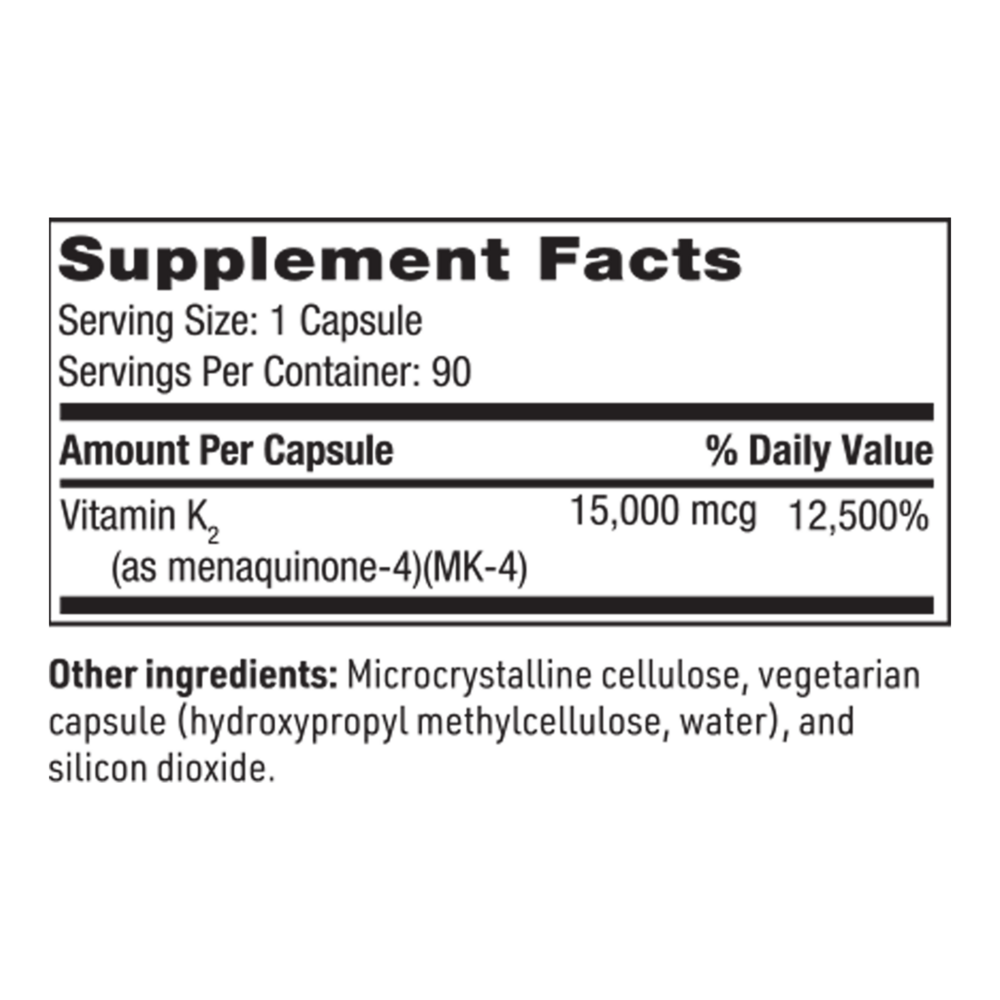

Klaire Labs/SFI Health
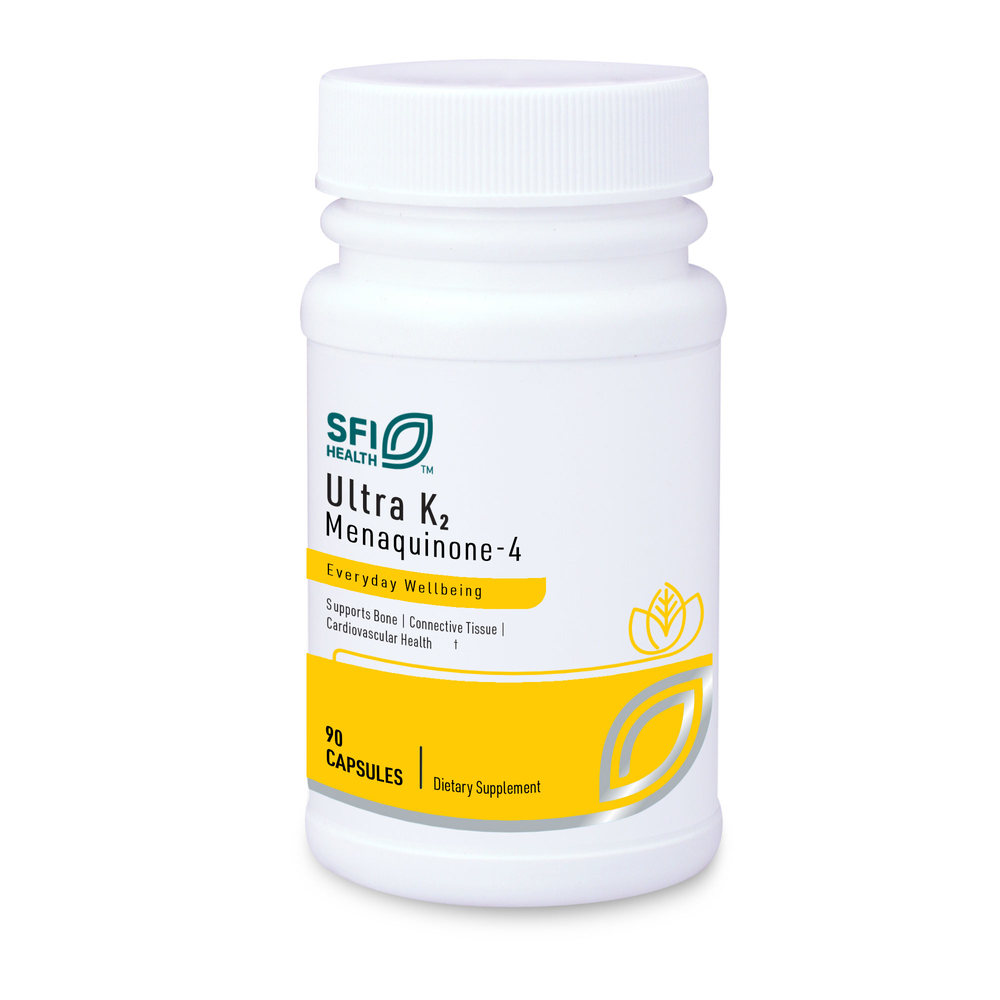
Ultra K2 Menaquinone - 4 15000 mcg by Klaire Labs/SFI Health
90 capsules · 90-day supply
Support Bone and Cardiovascular Health with Vitamin K2 Menaquinone-4$63.99
This item is currently out of stockGet notified when this item is back in stock
Practitioner-grade brand3rd-party testedFree shipping $50+
Vegetarian·Gluten Free·Soy Free·Tree Nut Free·Artificial Preservative Free·Fish Free·
Klaire Labs/SFI Health Ultra K2 Menaquinone - 4 overview
If your DEXA scan shows low bone density or you’re postmenopausal and working on bone health, high-dose vitamin K2 MK-4 is one of the few supplements with randomized trials behind it. It’s also reasonable for long-term steroid users and those already on osteoporosis medications who want an adjunct. If your calcium score is a concern, K2 is being studied for vascular calcification, but effects are modest and slower to show. Check Vitamin D, 25-Hydroxy first; K2 works best alongside adequate vitamin D.
MK-4 activates “Gla” proteins by carboxylation, an on-switch that lets them bind calcium. In bone, that’s osteocalcin (the protein that helps lock calcium into the matrix). In arteries, it’s matrix Gla protein, which inhibits calcium deposition in vessel walls. This 15 mg MK-4 is a pharmacologic dose; Japanese trials using 45 mg/day (split doses) reported fewer fractures. Compared with MK-7, MK-4 has a shorter half-life but the best fracture data at higher doses.
Take 1 capsule with food one to three times daily, matching the manufacturer’s guidance and the short half-life of MK-4. Many clinicians target 45 mg/day in divided doses when aiming for bone outcomes; 15 mg/day is a lower, maintenance-like approach. Pair with vitamin D3 and adequate dietary calcium if your intake is low. Expect bone turnover markers (like Osteocalcin) to shift within 4 to 12 weeks, while bone density changes take months to years.
Do not use vitamin K2 if you take warfarin (Coumadin); it counteracts its effect, altering Prothrombin Time/INR (the blood-thinning measure). Direct oral anticoagulants like apixaban and rivaroxaban don’t rely on vitamin K, but discuss any high-dose K2 with your prescriber. Large doses of vitamin E can blunt vitamin K activity. Pregnancy and dialysis patients should only use high-dose MK-4 with clinician oversight.
Frequently asked questions
Is vitamin K2 the same as MK-4 or MK-7?
Vitamin K2 is a family. MK-4 and MK-7 are two forms. MK-4 has a short half-life but is the form used at high doses in Japanese fracture trials. MK-7 lasts longer in blood and is usually taken once daily at lower doses.
How long does vitamin K2 MK-4 take to work for bones?
Bone turnover markers can shift within 4–12 weeks. Measurable bone density changes typically take 6–24 months. Fracture benefit in trials with 45 mg/day MK-4 was seen over 1–3 years, as part of a comprehensive bone plan with vitamin D and calcium.
Can I take vitamin K2 with vitamin D and calcium?
Yes, that’s common. Vitamin D helps you absorb calcium, and vitamin K2 activates proteins that place calcium into bone. If your Vitamin D, 25-Hydroxy is low, address that as well. Keep total calcium intake appropriate for your diet and clinician advice.
Does vitamin K2 thin or thicken your blood?
Vitamin K2 supports normal clotting factor activation; it does not thin blood. It directly interferes with warfarin (Coumadin), so avoid K2 on warfarin unless your prescriber is intentionally adjusting your dose and monitoring INR closely.
Is once-daily dosing okay for MK-4?
For high-dose MK-4 aimed at bone outcomes, divided dosing is preferred because MK-4 has a short half-life. The label’s 1–3 times daily reflects this. If you only take it once daily, consistency with meals containing fat matters more.
What side effects should I watch for with high-dose K2?
Vitamin K2 is generally well tolerated. Occasional reports include mild stomach upset when taken on an empty stomach. The main risk is interaction with warfarin. If you bruise or bleed unusually, or start/stop K2 on warfarin, seek medical guidance.
Do I need lab tests while taking vitamin K2?
Most people don’t need special testing. If you’re on warfarin, INR must be monitored. For bone programs, clinicians may follow Osteocalcin, Vitamin D, 25-Hydroxy, and periodic DEXA scans. Niche tests like dp-ucMGP exist but aren’t routine.
How to take it & ingredients
Suggested use: Take 1 capsule 1 to 3 times daily with food or as directed by a healthcare professional.
Active ingredients
1 capsule per serving · 90 servings
Vitamin K2
Menaquinone 4 (MK 4)
Menaquinone 4 (MK 4)
15000 mcg
Other ingredients: Microcrystalline cellulose, Vegetarian capsule (hydroxypropyl methylcellulose, water), Silicon dioxide
Certifications
Benefits
Warnings