 Instalab

Nordic Naturals
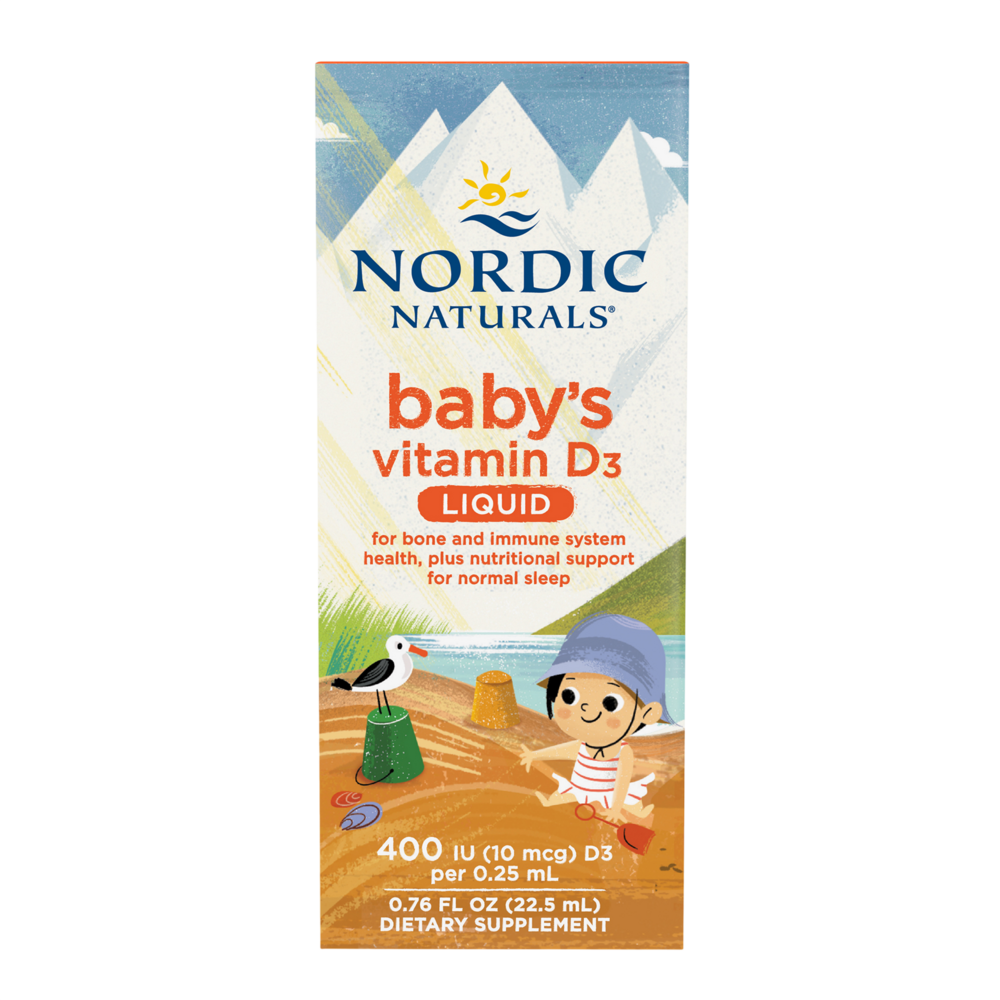
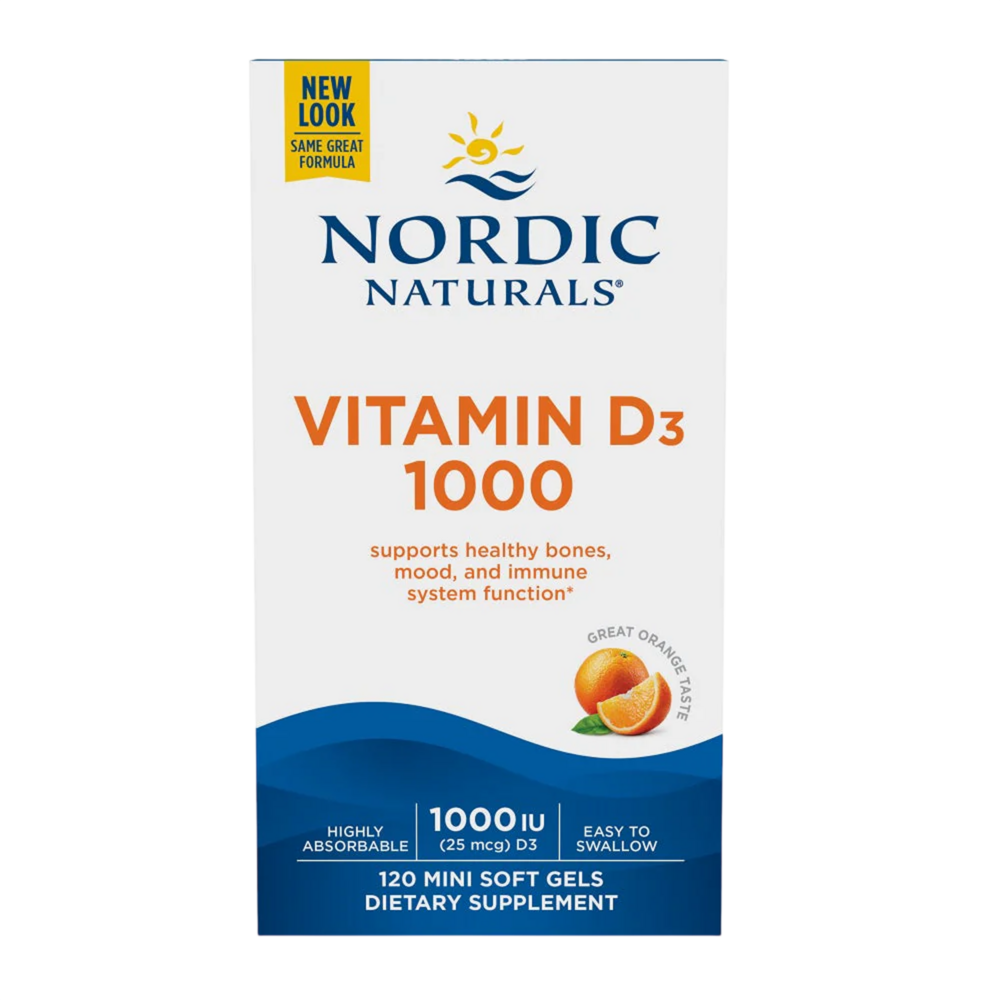
Vitamin D3 1000 by Nordic Naturals
120 softgels · 120-day supply
Daily Vitamin D3 in Olive Oil for Bone and Immune Support$17.99
Purchase options
Practitioner-grade brand3rd-party testedFree shipping $50+
Gluten Free·Soy Free·Milk Free·Wheat Free·Artificial Color Free
Nordic Naturals Vitamin D3 1000 overview
A 1000 IU soft gel is a maintenance dose. It suits adults whose Vitamin D (25-hydroxy) result is in range or only slightly low and who want to keep it there: people who get little midday sun, cover up or use sunscreen consistently, have darker skin at northern latitudes, or are heading into winter. If your level is clearly low, you will probably need a higher repletion dose first and can step down to this afterward.
Vitamin D3 (cholecalciferol) is the form your skin makes from sunlight, and it raises blood levels more reliably than D2. The liver and kidneys convert it into the active hormone that lets the gut absorb calcium and keeps parathyroid hormone, the signal that pulls calcium out of bone, in check. Here the D3 is dissolved in organic extra virgin olive oil inside a small orange-flavored soft gel, with rosemary extract and RRR-alpha tocopherol to protect the oil.
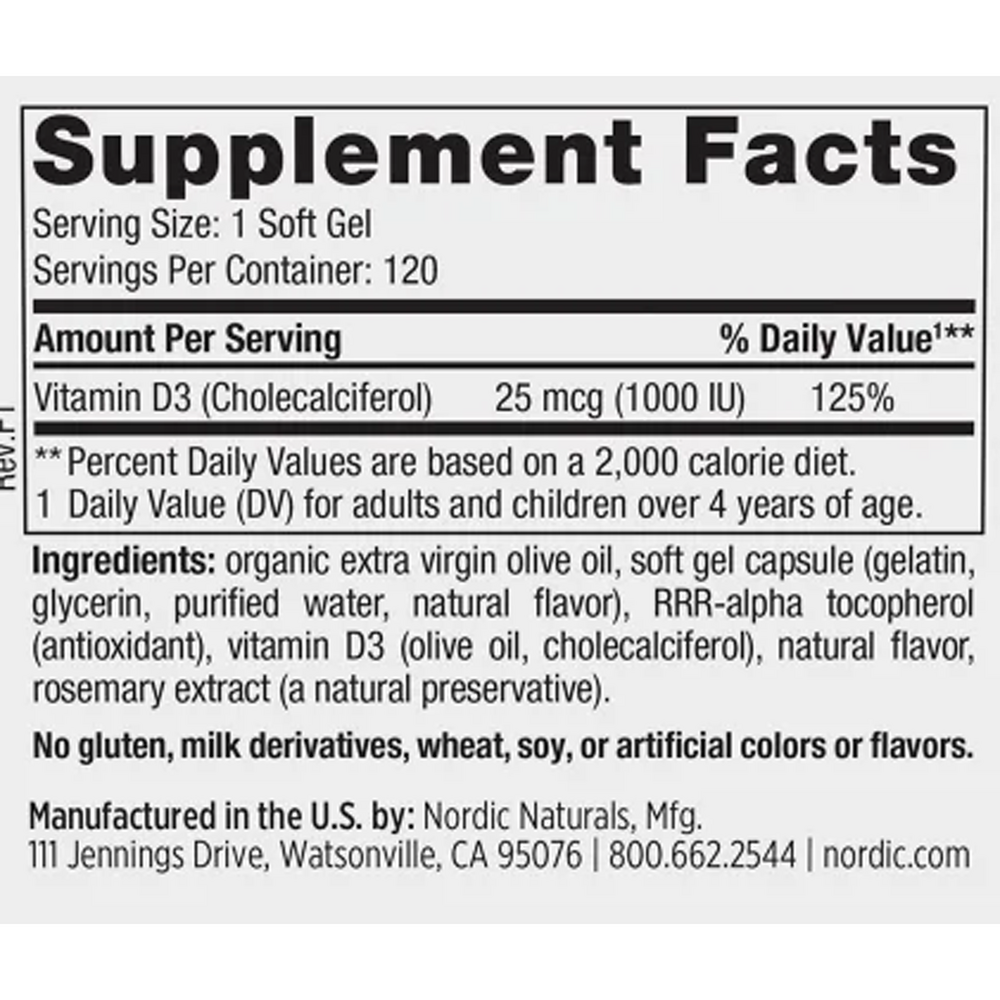
Each mini soft gel provides 1000 IU (25 mcg) of vitamin D3. The label directs adults to take one soft gel daily, with food. A meal that contains some fat suits it best, since vitamin D is fat-soluble; the time of day does not matter. Count the vitamin D in any multivitamin or calcium product you also take. Recheck Vitamin D (25-hydroxy) after 8–12 weeks and adjust with your clinician if you are still under target.
Avoid unsupervised vitamin D if you have had high blood calcium, recurrent kidney stones, primary hyperparathyroidism, sarcoidosis or significant kidney disease. Thiazide diuretics raise the chance of high calcium when combined with vitamin D. Orlistat and bile acid sequestrants such as cholestyramine reduce its absorption, so take them at a different time of day. If you are pregnant, nursing or on prescription medicines, check with your clinician. The soft gel is gelatin, so it is not vegetarian.
Blood levels move slowly: expect a measurable rise over 2–3 months, and no change you can feel unless you started out low. Higher-strength soft gels suit repletion, and liquid drops suit people who want to adjust the dose finely or cannot swallow capsules. Whether extra vitamin D helps mood or immune function in people who are not low is uncertain; its role in calcium and bone is the well-established one.
Frequently asked questions
Is 1000 IU of vitamin D3 a day enough?
For many adults it is enough to hold a level that is already in range. If your Vitamin D (25-hydroxy) is clearly low, you will likely need more for a period. Test, take a steady dose for 8–12 weeks, then retest.
When should I take vitamin D3?
The label says daily, with food. A meal that contains some fat is best, since vitamin D is fat-soluble and absorbs better that way. Morning or evening makes no real difference. Pick the meal you are least likely to skip.
How long does vitamin D3 take to raise my level?
Blood levels rise gradually over 2–3 months of daily use and then level off. Retest Vitamin D (25-hydroxy) after 8–12 weeks on a steady dose before deciding whether to change it.
Do I need vitamin K2 with vitamin D3?
Not for absorption. Vitamin D3 works without K2. Some people pair them because both are involved in how the body handles calcium, but evidence of added benefit at a maintenance dose like 1000 IU is limited.
Can I take too much vitamin D?
Yes, although it takes far more than 1000 IU a day. Excess vitamin D raises blood calcium, causing thirst, frequent urination, nausea or constipation. Count all your sources, and check Calcium and Vitamin D (25-hydroxy) if in doubt.
Is Nordic Naturals Vitamin D3 1000 vegetarian?
No. The soft gel capsule is made with gelatin. The label states no gluten, milk derivatives, wheat, soy or synthetic dyes, and it does not say where the vitamin D3 itself is sourced from.
Does vitamin D3 interact with medications?
A few. Thiazide diuretics can raise calcium when combined with vitamin D. Orlistat and bile acid sequestrants lower its absorption. Some anti-seizure medicines and long-term steroids lower vitamin D levels. Ask your clinician or pharmacist.
What is the difference between vitamin D2 and D3?
D3 (cholecalciferol) is the form human skin makes and is generally better at raising and holding blood levels than D2 (ergocalciferol), which comes from plants and fungi. This product contains D3.
How to take it & ingredients
Suggested use: Adults take one soft gel daily, with food, or as directed by your healthcare professional.
Active ingredients
1 soft gel per serving · 120 servings
Vitamin D
Cholecalciferol (D3)
Cholecalciferol (D3)
25 mcg, 1000 IU
Other ingredients: Organic extra virgin olive oil, Soft gel capsule (gelatin, glycerin, purified water, natural flavor), RRR-alpha tocopherol (antioxidant), Vitamin D3 (olive oil, cholecalciferol), Natural flavor, Rosemary extract (a natural preservative)
Certifications
Benefits
Warnings