 Instalab


Protocol for Life Balance
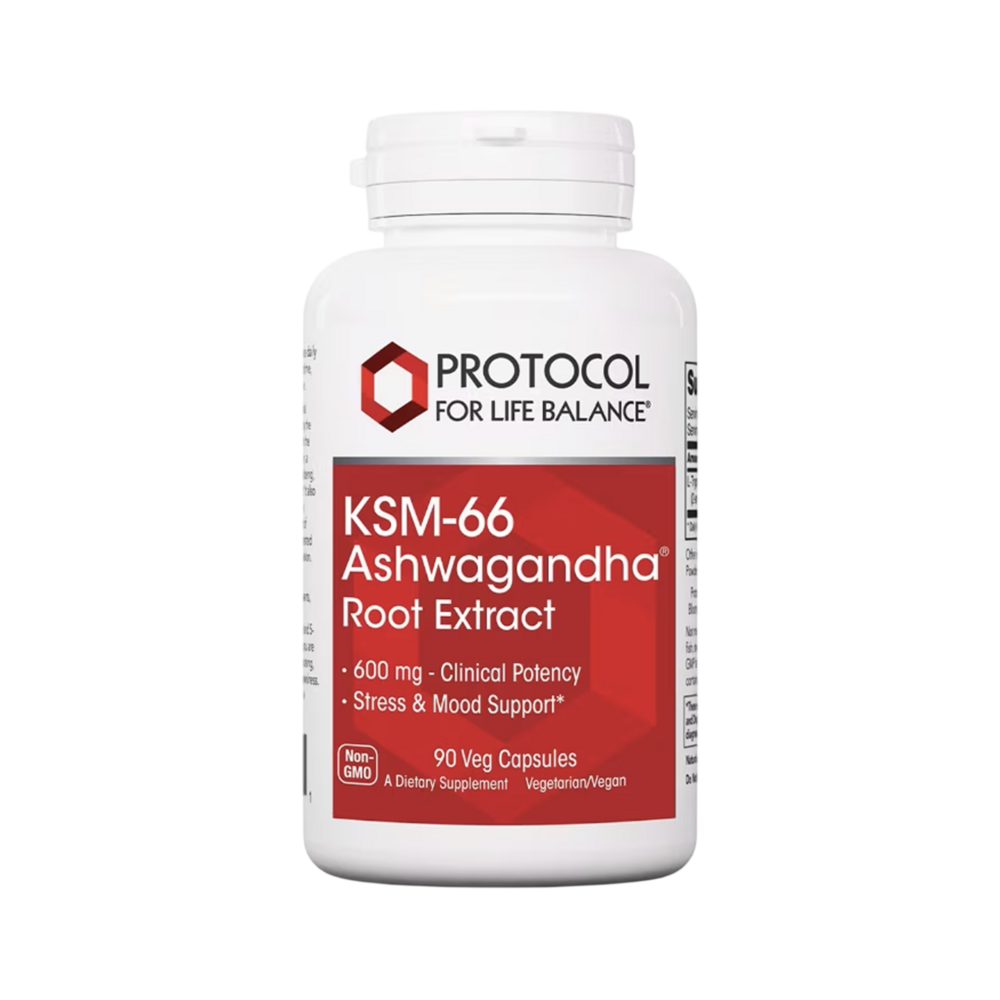
Protocol, KSM-66 Ashwagandha®, Stress and Sleep Support 600 mg by Protocol for Life Balance
90 capsules · 90-day supply
KSM-66 Ashwagandha Root Extract for Stress and Sleep Support$34.99
Purchase options
Practitioner-grade brand3rd-party testedFree shipping $50+
Vegan·Vegetarian·Gluten Free·Soy Free·Milk Free·Tree Nut Free·
Protocol for Life Balance Protocol, KSM-66 Ashwagandha®, Stress and Sleep Support overview
KSM-66 ashwagandha fits adults under sustained daily strain who want to feel less wound up and sleep more soundly, and who prefer a root-only extract in a one-capsule serving. If you track labs, morning Cortisol is the marker most often followed. Talk to your clinician first if your TSH, Free T4 or Free T3 is out of range or you take thyroid medicine, because ashwagandha can push thyroid hormone upward. The label states that it is for adults only.
Each capsule contains 600 mg of organic KSM-66, a branded extract of the root of Withania somnifera. Ashwagandha is classed as an adaptogen. Its withanolides appear to temper the HPA axis, the stress loop that links the brain to the adrenal glands, and to act on GABA signaling, the brain's main calming system. Trials of root extracts report lower perceived stress, modestly lower cortisol and somewhat better sleep, though most are small and run only 8–12 weeks.
The label directs 1 capsule daily, or as directed by your healthcare practitioner. One capsule provides 600 mg of the extract. Taking it with food may limit stomach upset. Evening suits people whose aim is sleep or who feel drowsy after a dose; morning suits those who find it mildly energizing. It works through steady daily use, not as a take-as-needed calming aid.
The label says it is not recommended for pregnant or nursing women, and to consult a physician if you take medication, especially thyroid hormones, or have a medical condition, especially a thyroid, liver or gastrointestinal condition, including ulcers. Ashwagandha can also add to the effect of sedatives, sleep medicines and alcohol, and may stimulate immune activity, so ask your specialist if you have an autoimmune condition or take immunosuppressants. Rare liver injury has been reported: stop and have ALT and AST checked if you notice dark urine or yellowing eyes.
Some people notice calmer edges or easier sleep within 1–2 weeks; fuller changes in perceived stress and sleep quality take 4–8 weeks. The label warns of digestive upset in sensitive people and says to stop if you have any gastrointestinal discomfort or a rash or itching. Long-term safety data are limited, so reassess after about three months. Magnesium glycinate and L-theanine are gentler options if you want calm without an herb that acts on hormones.
Frequently asked questions
What is KSM-66 ashwagandha?
KSM-66 is a branded extract of the root of Withania somnifera. This product provides 600 mg of organic KSM-66 per veg capsule. Root extracts of this kind are the ones most often studied for stress and sleep.
How long does ashwagandha take to work?
Some people feel calmer or sleep better within 1–2 weeks. Fuller changes in perceived stress and sleep quality usually take 4–8 weeks of steady daily use. Give it at least a month before deciding whether it helps you.
When is the best time to take ashwagandha?
The label directs 1 capsule daily, which provides 600 mg, and does not set a time. Evening suits people using it for sleep or who feel drowsy after a dose; morning suits those who find it mildly energizing. Keep the time consistent.
Does ashwagandha affect the thyroid?
It can raise thyroid hormone levels in some people. The label says to consult a physician if you take thyroid hormones or have a thyroid condition. If you start it, have TSH, Free T4 and Free T3 checked a few weeks in.
Can I take ashwagandha while pregnant or breastfeeding?
No. The label says this product is not recommended for pregnant or nursing women. Ask your clinician about other ways to manage stress and sleep during pregnancy and while breastfeeding.
What are the side effects of ashwagandha?
Digestive upset and drowsiness are the common ones. The label says to discontinue use if you have any gastrointestinal discomfort or if a rash or itching occurs. Rare liver injury has been reported; stop and see your clinician if you notice dark urine or yellowing of the eyes.
Can I take ashwagandha with other medications?
The label says to consult a physician if you take medication, especially thyroid hormones. Also ask first if you take sedatives or sleep medicines, immunosuppressants, or medicines for blood sugar or blood pressure, since ashwagandha can add to their effects.
Is it safe to take ashwagandha every day?
Daily use for 8–12 weeks is what most studies have tested, and it is generally well tolerated over that span. Longer-term data are limited, so review it with your clinician after about three months instead of taking it indefinitely.
How to take it & ingredients
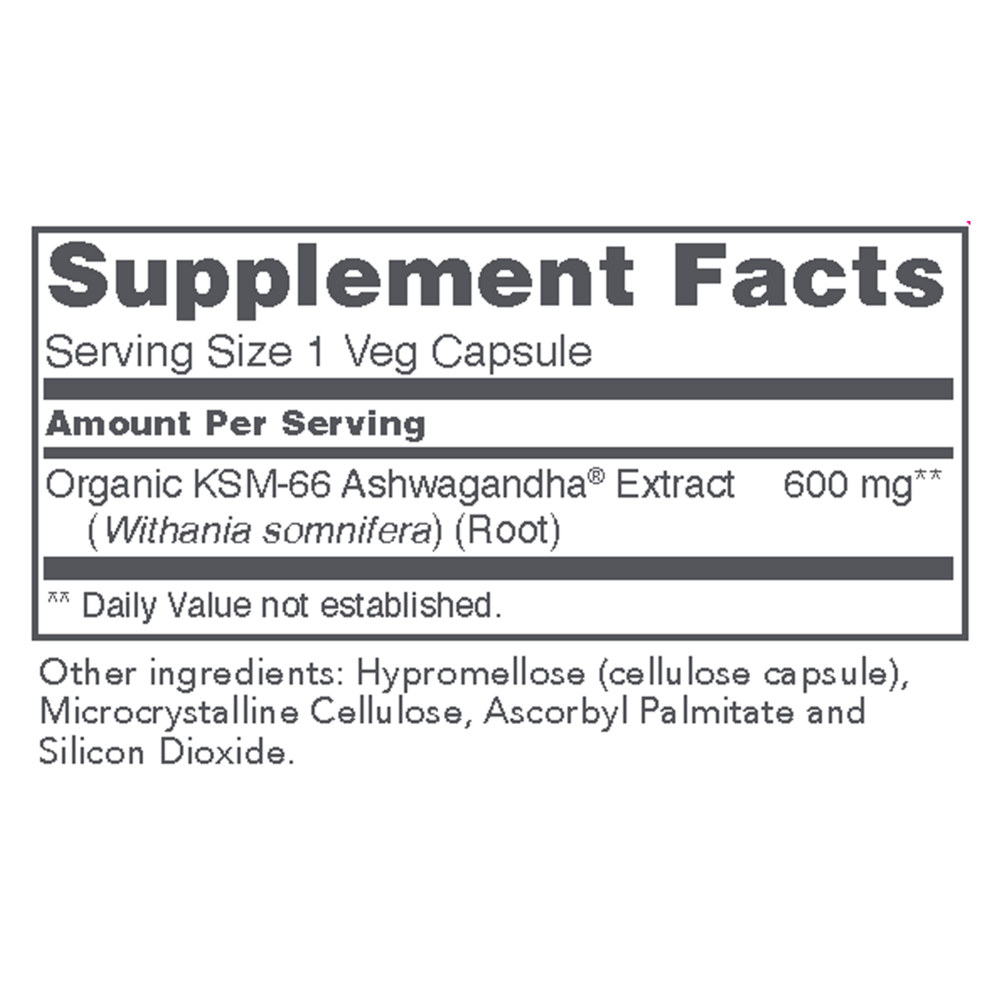
Suggested use: Take 1 capsule daily, or as directed by your healthcare practitioner.
Active ingredients
1 capsule per serving · 90 servings
Ashwagandha Root Extract
Organic KSM-66 Ashwagandha® Extract (Withania somnifera) (Root)
Organic KSM-66 Ashwagandha® Extract (Withania somnifera) (Root)
600 mg
Other ingredients: Hypromellose (cellulose capsule), Microcrystalline Cellulose, Ascorbyl Palmitate, Silicon Dioxide
Certifications
Benefits
Warnings