 Instalab


Protocol for Life Balance
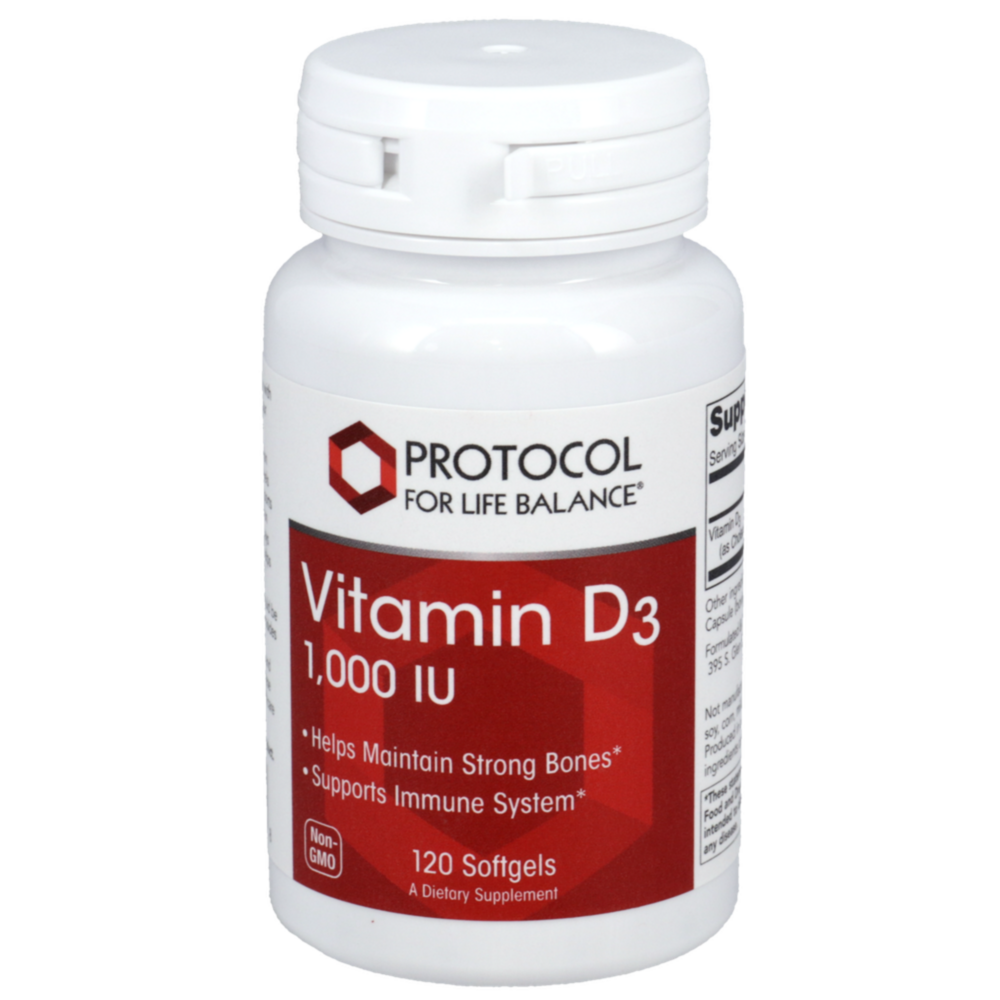
Vitamin D3 1,000IU by Protocol for Life Balance
120 softgels · 120-day supply
Maintenance-Dose Vitamin D3 for Bone, Muscle and Immune Support$9.99
Purchase options
Practitioner-grade brand3rd-party testedFree shipping $50+
Gluten Free·Soy Free·Milk Free·Fish Free·Crustacean Shellfish Free·Egg Free·
Protocol for Life Balance Vitamin D3 1,000IU overview
A 1,000 IU softgel is a maintenance dose for adults who want to keep Vitamin D (25-hydroxy) in a healthy range: people who get little midday sun, use sunscreen consistently, have darker skin at northern latitudes, or are older. It also suits anyone stepping down after a higher repletion dose. If your level is clearly low, or you carry more body weight, 1,000 IU a day will raise it only slowly; a higher dose for a few months first, then this, is the usual plan.
Vitamin D3 (cholecalciferol) is the form your skin makes from sunlight, and it raises blood levels more effectively than D2. The liver and kidneys convert it into the hormone that increases calcium absorption from the gut and helps keep parathyroid hormone in check, which is how it supports bone. Muscle and immune cells carry vitamin D receptors too. The D3 here comes from lanolin, the oil in sheep's wool, and is carried in extra virgin olive oil inside a bovine gelatin softgel, so it is not vegetarian.
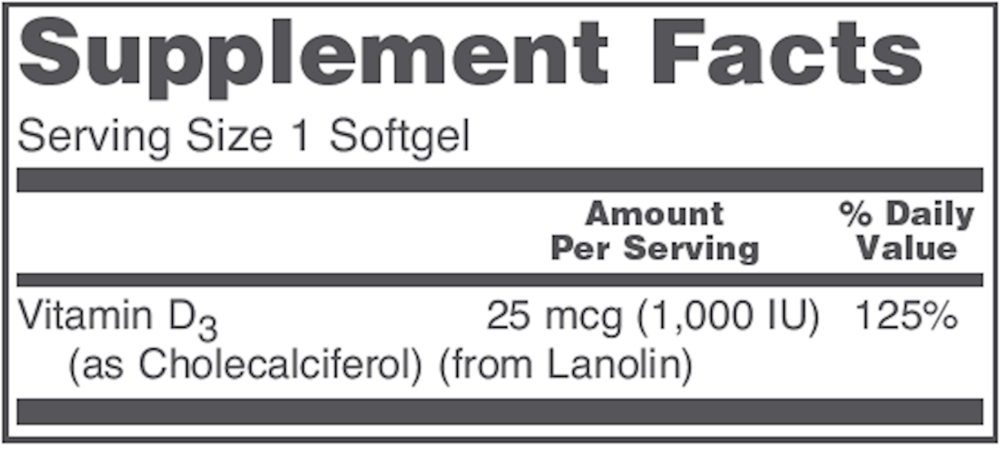
Each softgel provides 25 mcg (1,000 IU) of vitamin D3. The label directs 1 softgel daily with a fat-containing meal, or as directed by your healthcare practitioner. Vitamin D is fat-soluble, which is why the meal matters; morning or evening makes no difference. If you miss a day, carry on as normal the next day.
The label says vitamin D should be used cautiously by anyone with hypercalcemia (high calcium) or taking cardiac glycosides such as digoxin, and that it may interact with atorvastatin and thiazide diuretics; if you take any of these, consult your healthcare practitioner first. Check with your clinician too if you have recurrent kidney stones, primary hyperparathyroidism, sarcoidosis or significant kidney disease. Orlistat and bile acid sequestrants reduce absorption. Count the vitamin D in your multivitamin or calcium supplement toward your total.
Vitamin D (25-hydroxy) moves slowly: retest after 8–12 weeks on a steady dose, then adjust. You will not feel it working; the result is on the lab report. Once your level is where you and your clinician want it, a yearly check, ideally at the end of winter when levels are lowest, is enough. Drops are an alternative if you prefer not to swallow softgels.
Frequently asked questions
Is 1,000 IU of vitamin D enough?
For holding a level that is already adequate, often yes. For raising a low Vitamin D (25-hydroxy), it works slowly, and many adults need more for a few months first. A lab result is the only way to know which applies to you.
When should I take vitamin D3?
The label directs 1 softgel daily with a fat-containing meal, or as directed by your healthcare practitioner. Any meal with some fat will do, at any time of day. Each softgel provides 25 mcg (1,000 IU).
How long does it take to raise vitamin D levels?
Vitamin D (25-hydroxy) rises gradually and levels off after about 8–12 weeks on a steady dose. Retest then. Your starting level, body weight, absorption and how consistently you take it all affect the result.
Is this vitamin D3 vegan or vegetarian?
No. The softgel is made from bovine gelatin with glycerin and water, and the label states that the cholecalciferol is from lanolin, which comes from sheep's wool. The only other ingredient is extra virgin olive oil.
Should I take vitamin K2 with vitamin D3?
You do not need K2 to absorb vitamin D. K2 is sometimes paired with higher-dose vitamin D or with calcium; evidence that it adds benefit at a 1,000 IU maintenance dose is mixed. This product contains vitamin D3 only.
Can I take vitamin D with my medications?
The label says to consult your healthcare practitioner first if you take cardiac glycosides such as digoxin, atorvastatin or a thiazide diuretic. Orlistat and bile acid sequestrants such as cholestyramine reduce vitamin D absorption, so take them a few hours apart.
Can you take too much vitamin D?
Yes, though not easily at this dose. The adult upper limit is 4,000 IU (100 mcg) a day from all supplements unless a clinician directs more. Excess shows up as high calcium: thirst, frequent urination, nausea and constipation.
Do I still need vitamin D in summer?
Possibly. Sun exposure raises vitamin D, but latitude, skin tone, sunscreen, clothing and time indoors make it unreliable. If your Vitamin D (25-hydroxy) holds in range through summer without a supplement, you can pause and restart in autumn.
How to take it & ingredients
Suggested use: Take 1 softgel daily with a fat-containing meal, or as directed by your healthcare practitioner.
Active ingredients
1 softgel per serving · 120 servings
Vitamin D
Vitamin D3 (as Cholecalciferol) (from Lanolin)
Vitamin D3 (as Cholecalciferol) (from Lanolin)
25 mcg, 1000 IU
Other ingredients: Extra Virgin Olive Oil, Softgel Capsule (bovine gelatin, glycerin, water)
Certifications
Benefits
Warnings