 Instalab


Protocol for Life Balance
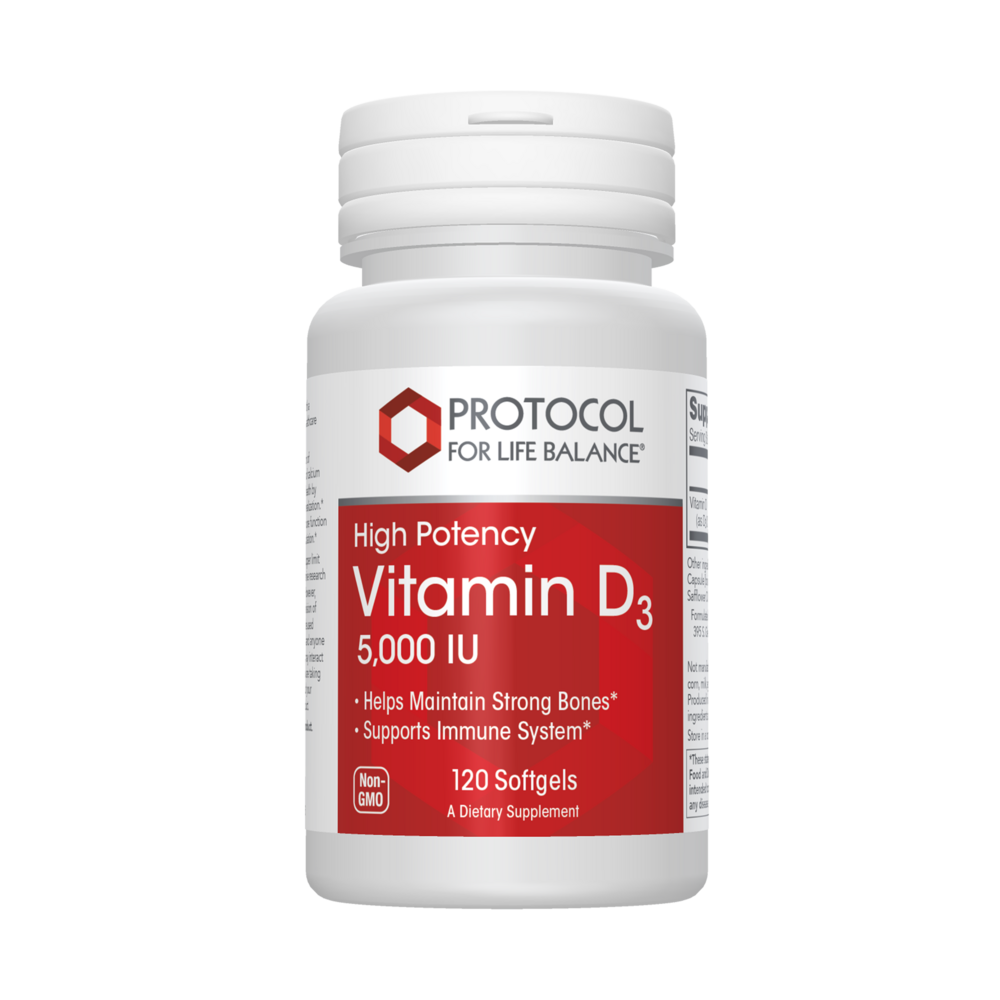
Vitamin D3 5,000IU by Protocol for Life Balance
120 softgels · 120-day supply
High-Potency Vitamin D3 for Bone, Muscle and Immune Support$14.99
Purchase options
Practitioner-grade brand3rd-party testedFree shipping $50+
Gluten Free·Soy Free·Milk Free·Fish Free·Crustacean Shellfish Free·Egg Free·
Protocol for Life Balance Vitamin D3 5,000IU overview
This high-potency softgel is for adults whose Vitamin D (25-hydroxy) has tested low and who need a repletion dose, or whose clinician has found they need more than standard amounts to hold their level, as can happen with higher body weight or fat-absorption problems. The label itself notes that the upper limit for vitamin D is 4,000 IU per day and says this product should be taken under the supervision of a healthcare professional, so it belongs with a lab result and a retest plan. For routine maintenance, a lower dose is the better fit.
Vitamin D3 (cholecalciferol) is the form skin makes from sunlight, and it raises blood levels more effectively than D2. The liver and kidneys convert it into the hormone that increases calcium absorption from the gut and helps keep parathyroid hormone in check, which is how it supports bone and muscle. The D3 here comes from lanolin and is carried in extra virgin olive oil and safflower oil inside a bovine gelatin softgel, so it is not vegetarian.
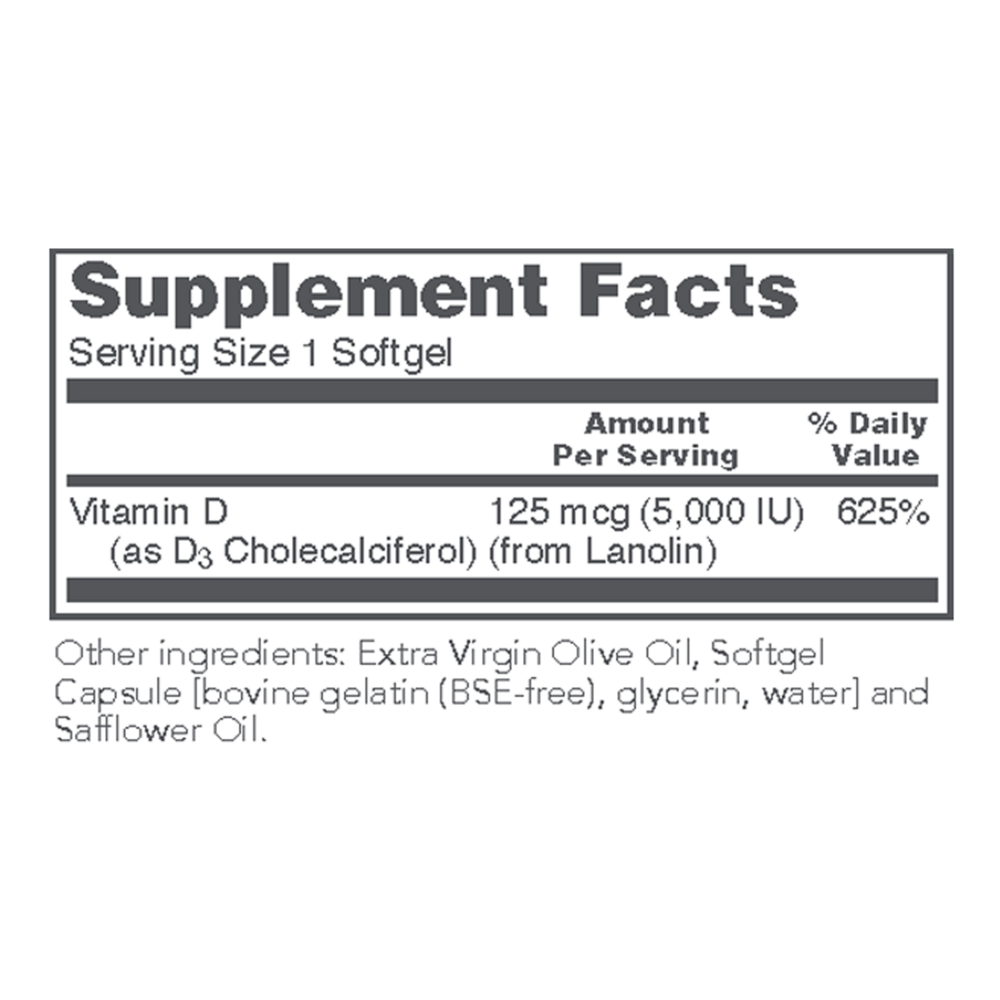
Each softgel provides 125 mcg (5,000 IU) of vitamin D3. The label directs 1 softgel daily with a fat-containing meal, or as directed by your healthcare practitioner, who may set a different schedule based on your level. Count every other source of vitamin D you use, such as a multivitamin, a calcium and D combination or cod liver oil, toward your total.
The label says vitamin D should be used cautiously by anyone with hypercalcemia (high calcium) or taking cardiac glycosides such as digoxin, and that it may interact with atorvastatin and thiazide diuretics; if you take any of these, consult your healthcare practitioner before using it. At this dose, use it only under supervision if you have primary hyperparathyroidism, sarcoidosis, kidney disease or a history of kidney stones. Orlistat and bile acid sequestrants reduce absorption. Check with your clinician if you are pregnant or nursing.
Vitamin D (25-hydroxy) rises over 8–12 weeks, so retest at about three months, with Calcium, and step down once you are in range. Staying on 5,000 IU for long periods without testing is how levels drift too high. Signs of excess are those of high calcium: thirst, frequent urination, nausea, constipation and confusion. You will not feel the vitamin working; the lab result tells you.
Frequently asked questions
Is 5,000 IU of vitamin D3 a day safe?
The label notes that the upper limit for vitamin D is 4,000 IU per day and says this product should be taken under the supervision of a healthcare professional. Clinicians commonly use it for a few months to correct a low level, with Vitamin D (25-hydroxy) and Calcium rechecked.
Who should take 5,000 IU instead of a lower dose?
Adults with a documented low Vitamin D (25-hydroxy), and some people with higher body weight or fat-absorption problems who do not hold their level on less. If your level is already in range, a lower maintenance dose fits better.
How long should I stay on 5,000 IU of vitamin D?
Until a retest says otherwise. Check Vitamin D (25-hydroxy) after 8–12 weeks. Once you are in range, most people step down to a lower maintenance dose. Your clinician may keep you on it longer if your level falls without it.
When should I take a vitamin D3 softgel?
The label directs 1 softgel daily with a fat-containing meal, or as directed by your healthcare practitioner. Any meal with some fat will do, at any time of day. Each softgel provides 125 mcg (5,000 IU).
Is this vitamin D3 vegetarian?
No. The softgel is made from bovine gelatin (labeled BSE-free) with glycerin and water, and the cholecalciferol comes from lanolin. The oils are extra virgin olive oil and safflower oil. The bottle is marked non-GMO.
What are the signs of too much vitamin D?
They come from high calcium: thirst, frequent urination, constipation, nausea, weakness or confusion. If you notice these, stop the supplement and ask your clinician to check Calcium and Vitamin D (25-hydroxy).
Can I take high-dose vitamin D with my medications?
The label says to consult your healthcare practitioner first if you take cardiac glycosides such as digoxin, atorvastatin or a thiazide diuretic. Orlistat and bile acid sequestrants such as cholestyramine reduce absorption; take them a few hours apart from your softgel.
Do I need vitamin K2 with 5,000 IU of vitamin D3?
You do not need K2 to absorb vitamin D, and this product does not contain it. K2 is often paired with higher-dose vitamin D because it activates proteins that handle calcium; evidence of added benefit is mixed. If you take warfarin, do not add vitamin K without your prescriber.
How to take it & ingredients
Suggested use: Take 1 softgel daily with a fat-containing meal, or as directed by your healthcare practitioner.
Active ingredients
1 softgel per serving · 120 servings
Vitamin D
D3 Cholecalciferol (from Lanolin)
D3 Cholecalciferol (from Lanolin)
125 mcg, 5000 IU
Other ingredients: Extra Virgin Olive Oil, Softgel Capsule [bovine gelatin (BSE-free), glycerin, water], Safflower Oil
Certifications
Benefits
Warnings