 Instalab

Pure Encapsulations
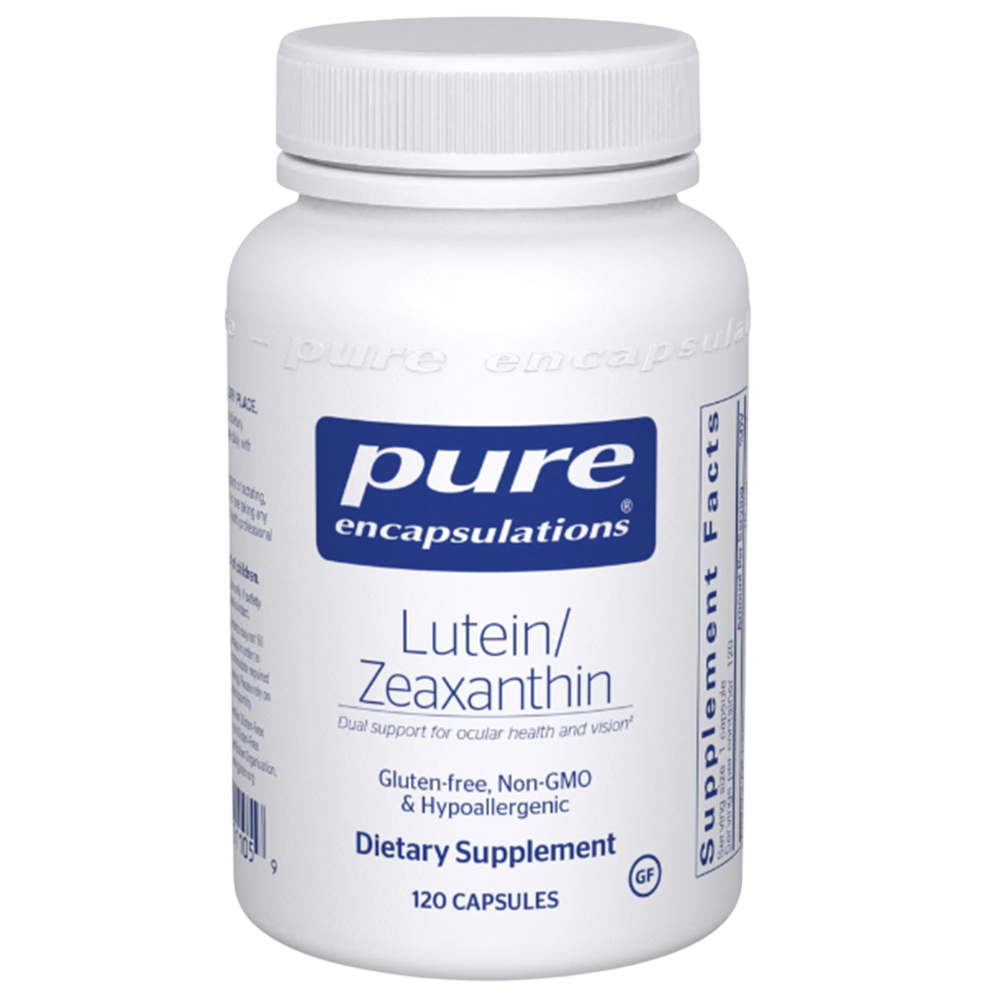
Lutein/Zeaxanthin by Pure Encapsulations
120 capsules · 120-day supply
Macular Carotenoids Lutein and Zeaxanthin for Eye Health$68.99
Purchase options
Practitioner-grade brand3rd-party testedFree shipping $50+
Gluten Free
Pure Encapsulations Lutein/Zeaxanthin overview
Lutein and zeaxanthin suit adults who want to support the macula, the central part of the retina responsible for sharp, detailed vision. That includes people with a family history of age-related eye changes, those who eat few leafy greens or eggs, and people who spend long days at screens. No routine blood test guides their use; an eye exam is the relevant check. If an eye doctor has recommended an AREDS2 formula, note that this product supplies the two carotenoids only, without the vitamins C and E, zinc and copper that formula includes.
Lutein and zeaxanthin are carotenoids, yellow pigments found in leafy greens, corn and egg yolks. The body cannot make them. They concentrate in the macula, where they form the macular pigment that filters blue light and helps protect the light-sensing cells beneath it from oxidative stress. Supplementing raises macular pigment density over months, and denser pigment is linked with better contrast sensitivity and quicker recovery from glare. FloraGLO is a branded lutein used in much of the published research.
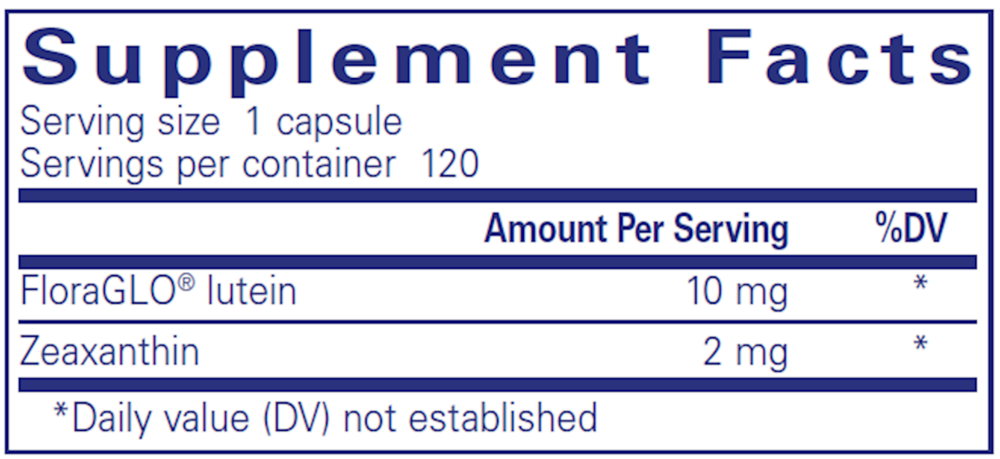
Each capsule provides 10 mg of FloraGLO lutein and 2 mg of zeaxanthin, and the label directs 1 capsule daily, with a meal. Choose a meal that contains some fat, such as eggs, olive oil, avocado or nuts, because carotenoids are fat-soluble and absorb poorly on an empty stomach. Time of day does not matter; consistency does.
Lutein and zeaxanthin have a good safety record at these amounts, and no significant drug interactions are established. Medicines that block fat absorption, such as orlistat and bile acid sequestrants, can lower carotenoid absorption, so take them a few hours apart. If you are pregnant or nursing, or take prescription medicines, check with your clinician first. Any sudden change in vision needs an eye doctor promptly, not a supplement.
Macular pigment builds slowly. Studies that measure it typically see a rise over three to six months, and any change in glare or contrast follows gradually, so judge it over half a year. Food is the alternative and the foundation: spinach, kale and egg yolks are rich sources, and a serving of cooked greens can supply as much lutein as this capsule or more. A supplement is the practical choice when your diet does not reliably include them.
Frequently asked questions
What do lutein and zeaxanthin do for the eyes?
They are the carotenoids that form the macular pigment at the center of the retina. That pigment filters blue light and helps protect the cells responsible for sharp, detailed vision. The body cannot make them, so they come from food or supplements.
How much lutein and zeaxanthin is in each capsule?
Each capsule provides 10 mg of FloraGLO lutein and 2 mg of zeaxanthin. The label directs 1 capsule daily, with a meal. These are the amounts of the two carotenoids used in the AREDS2 formula.
Is this the same as an AREDS2 supplement?
No. It matches the lutein and zeaxanthin amounts in the AREDS2 formula, but that formula also contains vitamin C, vitamin E, zinc and copper. If your eye doctor has recommended AREDS2, ask whether this product alone is enough for you.
Should I take lutein with food?
Yes. The label says to take it with a meal. Lutein and zeaxanthin are fat-soluble, so a meal that includes some fat, such as eggs, olive oil, avocado or nuts, helps. Absorption on an empty stomach is poor.
How long does lutein take to work?
Macular pigment rises gradually over three to six months of daily use. Any change in glare recovery or contrast comes on slowly, so give it about six months before judging. It will not correct blurry vision that needs glasses.
Are there side effects from lutein and zeaxanthin?
They are well tolerated at these amounts. Very high intakes over a long time can cause a harmless yellowing of the skin that fades when intake drops. If you are pregnant, nursing or on prescription medicines, check with your clinician first.
Can I get enough lutein from food?
Often, yes. Spinach, kale, collard greens and egg yolks are rich sources, and a serving of cooked greens can match or exceed this capsule. A supplement makes sense if you rarely eat these foods or want a consistent daily amount.
Does lutein help with screen time and blue light?
The macular pigment filters blue light, and some small trials report less eye strain and better contrast in heavy screen users who supplement. The evidence is modest. Regular breaks, good lighting and an up-to-date eye exam matter more.
How to take it & ingredients
Suggested use: As a dietary supplement, take 1 capsule daily, with a meal.
Active ingredients
1 capsule per serving · 120 servings
Lutein
FloraGLO® lutein
FloraGLO® lutein
10 mg
Zeaxanthin
2 mg
Other ingredients: Hypoallergenic plant fiber (cellulose), Red beet root powder, Vegetarian capsule (cellulose, water)
Certifications
Benefits
Warnings