 Instalab

Pure Encapsulations
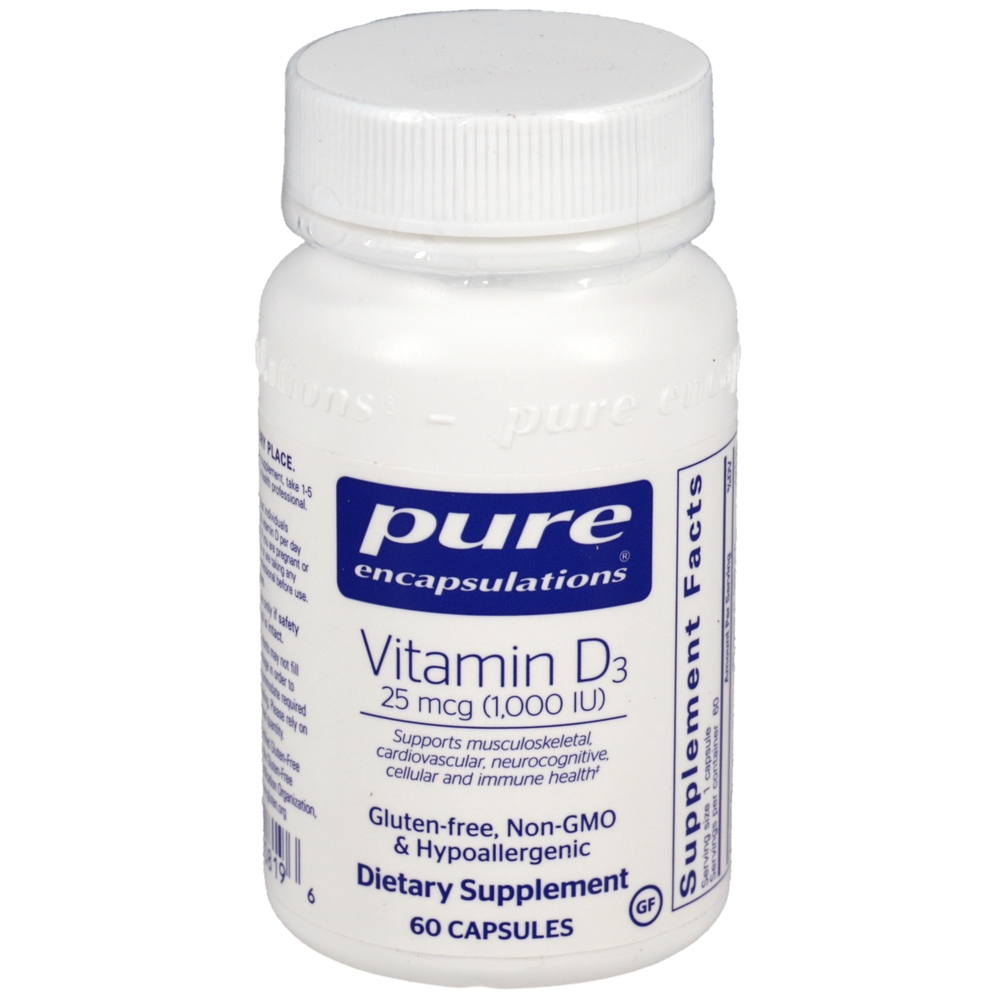
Vitamin D3 25mcg (1,000IU) by Pure Encapsulations
60 capsules · 60-day supply
Everyday Vitamin D3 for Bone, Muscle and Immune Health$14.99
Purchase options
Practitioner-grade brand3rd-party testedFree shipping $50+
Gluten Free
Pure Encapsulations Vitamin D3 25mcg (1,000IU) overview
This 1,000 IU capsule suits adults whose Vitamin D (25-hydroxy) level is in range or only slightly low and who want a steady daily dose to keep it there. People who get little midday sun, cover up or use sunscreen consistently, have darker skin, live at northern latitudes or are older commonly run low. If your level is clearly low, one capsule a day is usually too little to bring it up in reasonable time. The label allows up to 5 capsules daily, but settle a repletion dose with your clinician instead of guessing, then step down to maintenance.
Cholecalciferol (vitamin D3) is the form skin makes from sunlight, and it raises blood levels more reliably than vitamin D2. The liver converts it to 25-hydroxyvitamin D, the form measured on a blood test, and the kidneys then make the active hormone. That hormone increases calcium and phosphorus absorption from the gut, which is why vitamin D matters for bone, and it supports normal muscle and immune function.
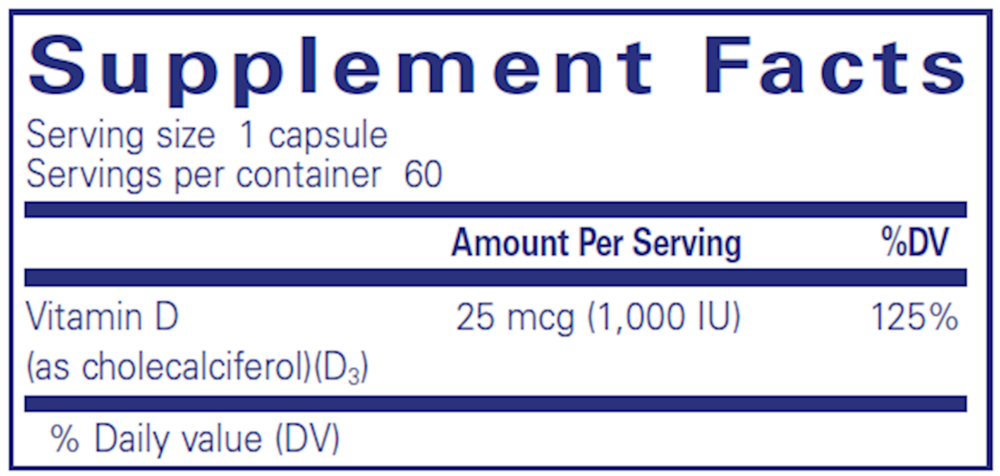
Each capsule provides 25 mcg (1,000 IU) of vitamin D3. The label's directions are 1–5 capsules daily, consumed with food, or as directed by a health professional. A meal that contains some fat improves absorption; the time of day does not matter. One capsule a day is a common maintenance amount. The label recommends that people taking more than 50 mcg (2,000 IU) of vitamin D a day have their blood levels monitored, so go above 2 capsules only with a Vitamin D (25-hydroxy) result and your clinician's advice.
Vitamin D raises calcium absorption, so people with high blood calcium, primary hyperparathyroidism, sarcoidosis or another granulomatous disease, a history of calcium kidney stones or significant kidney disease should take it only under medical supervision. The top of the label's range, 5 capsules (125 mcg, 5,000 IU), is above the 100 mcg (4,000 IU) a day usually given as the adult upper limit without supervision. Thiazide diuretics add to the risk of high calcium, and high calcium is dangerous with digoxin. Orlistat and bile acid sequestrants reduce absorption. If you are pregnant or nursing, have a health condition or take any medication, check with your clinician first.
Blood levels change slowly. Retest Vitamin D (25-hydroxy) about 3 months after starting or changing a dose; checking sooner mostly shows a level still on the move. You will not feel a capsule working. Compared with higher-strength capsules sold for repletion, this strength leaves room to fine-tune a dose, and compared with drops it is simpler but less flexible. Calcium and PTH Intact are the companion tests when your clinician is looking at bone health.
Frequently asked questions
How much vitamin D is in each capsule?
Each capsule provides 25 mcg, which is 1,000 IU, of vitamin D as cholecalciferol (D3). One capsule is one serving, and the product comes in bottles of 60, 120 and 250 capsules.
How many vitamin D3 capsules should I take a day?
The label says 1–5 capsules daily, with food, or as directed by a health professional. One capsule (1,000 IU) often holds a level that is already in range. Go higher only with a Vitamin D (25-hydroxy) result and your clinician's advice, and retest after about 3 months.
Should I take vitamin D3 with food?
Yes. The label says to consume it with food. Vitamin D is fat-soluble, so a meal that contains some fat improves absorption. Morning or evening makes no difference; choose the meal you are least likely to skip.
What is the difference between vitamin D2 and D3?
D3 (cholecalciferol) is the form human skin makes from sunlight; D2 (ergocalciferol) comes from plants and fungi. Both raise blood levels, but D3 does so more effectively and holds them longer, which is why most supplements use it.
How long does it take to raise vitamin D levels?
Levels climb over weeks and settle at a new steady point after roughly 3 months on a consistent dose. Retest Vitamin D (25-hydroxy) then. Testing much earlier tends to underestimate where you will end up.
Can you take too much vitamin D?
Yes, with sustained high intake. Excess vitamin D raises blood calcium, causing thirst, frequent urination, nausea or confusion. The label recommends blood monitoring above 50 mcg (2,000 IU) a day. The usual adult upper limit without supervision is 100 mcg (4,000 IU); 5 capsules a day exceeds it.
Do I need vitamin K2 with vitamin D3?
You do not need K2 to absorb or use vitamin D3. The two are often paired because both are involved in how the body handles calcium, but the evidence that adding K2 improves outcomes at a maintenance dose of D3 is mixed.
Does vitamin D interact with medications?
It can. Thiazide diuretics taken with vitamin D can raise blood calcium, and high calcium is a concern with digoxin. Orlistat and cholestyramine reduce vitamin D absorption. Tell your clinician and pharmacist about every supplement you take.
How to take it & ingredients
Suggested use: As a dietary supplement, take 1-5 capsules daily, or as directed by a health professional. Consume with food.
Active ingredients
1 capsule per serving · 60 servings
Vitamin D
Cholecalciferol (D3)
Cholecalciferol (D3)
25 mcg, 1000 IU
Other ingredients: Hypoallergenic plant fiber (cellulose), Vegetarian capsule (cellulose, water)
Certifications
Benefits
Warnings