 Instalab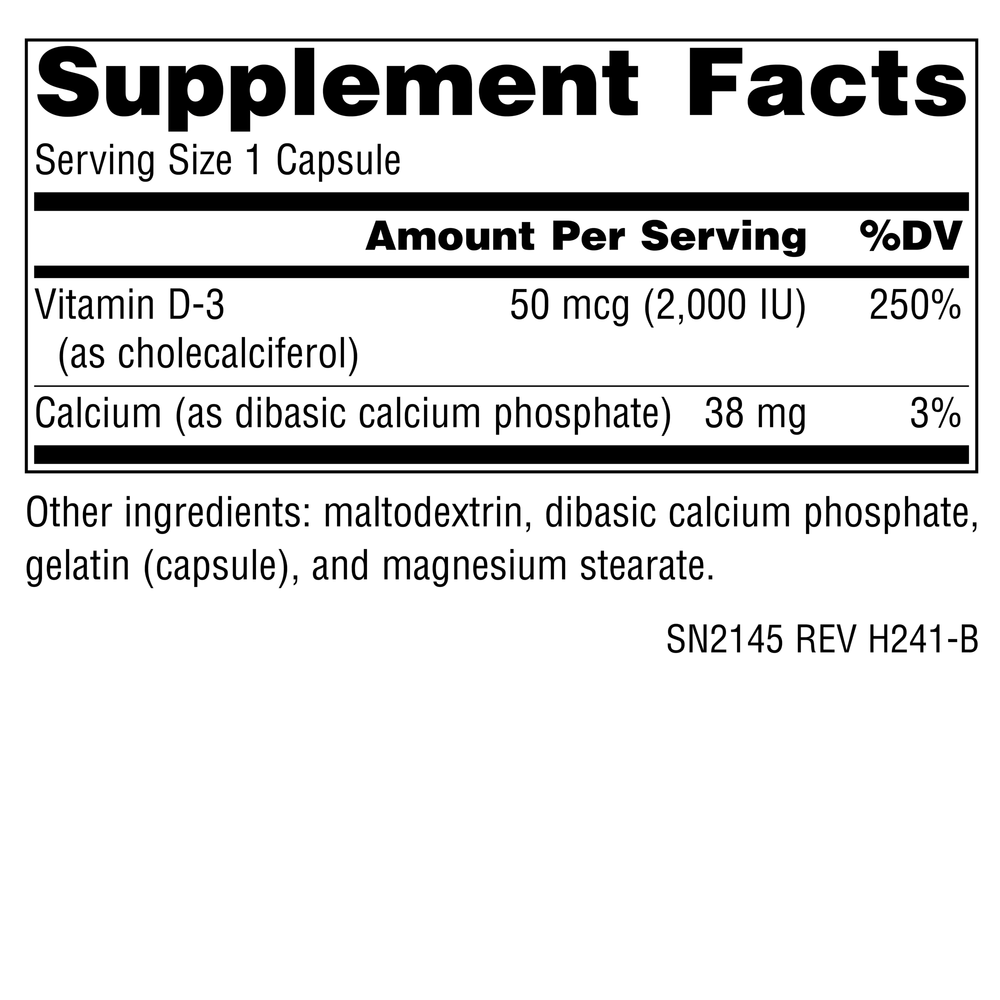

Source Naturals
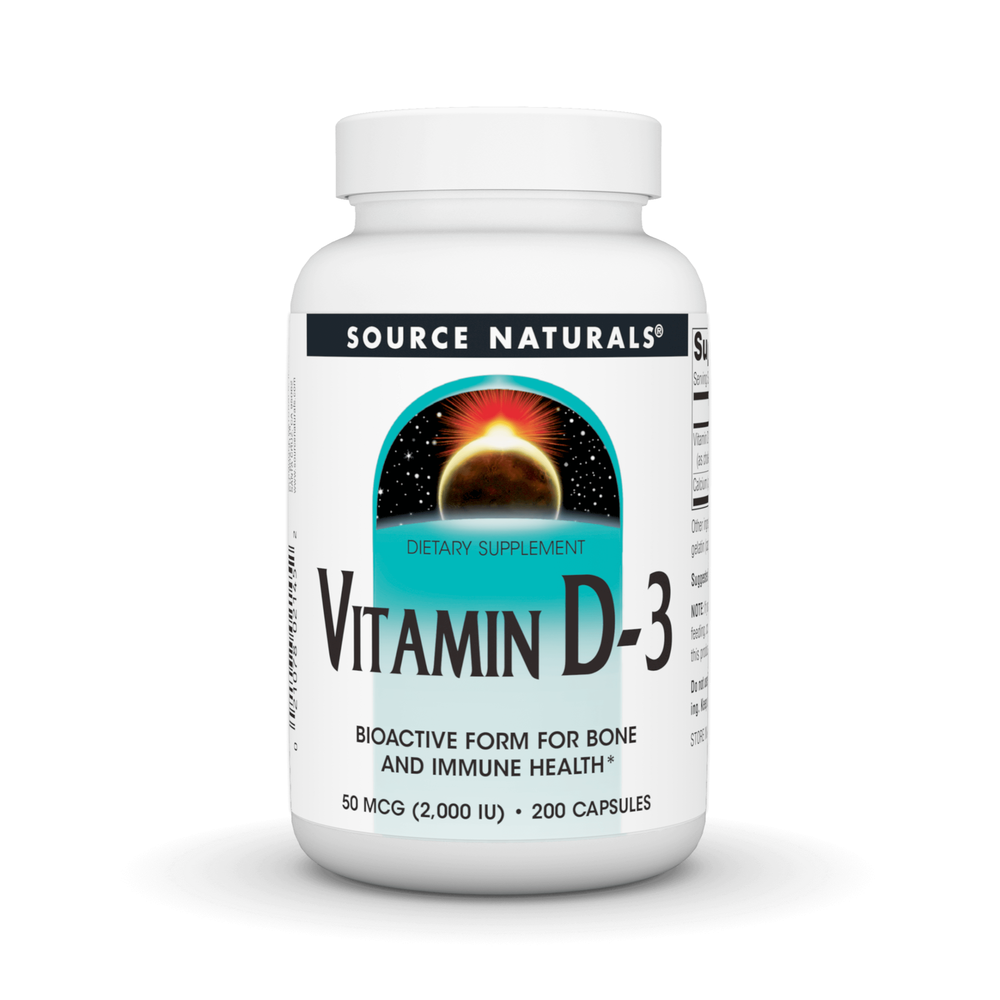
Vitamin D-3 by Source Naturals
200 capsules · 200-day supply
Essential Vitamin D3 for Bone Health and Immune Support$15.75
Purchase options
Practitioner-grade brand3rd-party testedFree shipping $50+
Gluten Free·Soy Free·Dairy Free·Egg Free·Salt Free·Wheat Free·
Source Naturals Vitamin D-3 overview
If your Vitamin D, 25-Hydroxy is in the lower part of the normal range and you want a steady maintenance plan, vitamin D3 2,000 IU fits. It suits adults with limited sun, darker skin, consistent sunscreen use, or northern latitudes, and it’s often appropriate for older adults and those with higher body weight. If your level is meaningfully low or you have malabsorption (celiac, inflammatory bowel disease, post–bariatric surgery), this dose is usually too low for repletion and you’ll likely need a higher short-term plan, then step down.
Cholecalciferol (vitamin D3) is the form your skin makes from sunlight and is more effective at raising blood levels than D2 (ergocalciferol). Your liver turns D3 into 25-hydroxyvitamin D, the storage form measured on labs, and your kidneys convert that to the active hormone that boosts calcium absorption from the gut. As levels normalize, parathyroid hormone (the signal that pulls calcium from bone) quiets, which helps bone density and muscle function. The COVID-era infection claims didn’t hold up in randomized trials, so take D3 for bones and deficiency, not as an antiviral.
Take one capsule with a meal that includes some fat for better absorption. Recheck Vitamin D, 25-Hydroxy after 8–12 weeks to confirm you’re on target. This is a maintenance-level dose; for established deficiency, clinicians often use higher short-term dosing before stepping down to 2,000 IU. If you consistently need more than this, a 5,000 IU softgel is more practical. The small 38 mg of calcium here is negligible toward daily calcium intake.
Avoid unsupervised vitamin D3 if you’ve had high calcium, recurrent kidney stones, sarcoidosis or other granulomatous disease (conditions that can raise active vitamin D), or severe kidney disease. Pregnancy and breastfeeding generally allow 2,000 IU, but confirm with your clinician. If your Calcium is high or parathyroid hormone is abnormal on labs, sort that out first before supplementing.
Thiazide diuretics (blood pressure meds like hydrochlorothiazide) plus vitamin D can raise calcium too high; monitor Calcium if you use both. Orlistat (a fat-blocking drug) and cholestyramine (a bile acid binder) reduce absorption—separate dosing and verify with Vitamin D, 25-Hydroxy after 8–12 weeks. Long-term steroids and some anti-seizure drugs lower vitamin D levels, so you may need a higher maintenance dose under medical guidance.
Frequently asked questions
Is 2,000 IU of vitamin D3 enough?
For maintenance, yes for many adults—especially if your Vitamin D, 25-Hydroxy is low-normal. For established deficiency, clinicians typically start with higher doses short term, then step down to 2,000 IU and recheck labs in 8–12 weeks.
How long does vitamin D3 take to work?
You’ll usually see Vitamin D, 25-Hydroxy rise within 4–12 weeks. The timeline depends on your baseline level, body weight, sun exposure, and adherence. Recheck at 8–12 weeks to decide whether to stay the course or adjust.
Should I take vitamin D3 with food or at night?
Take it with a meal that contains fat—timing matters less than consistency. Morning or evening is fine. The key is pairing with food to improve absorption and taking it daily.
Do I also need calcium with vitamin D3?
Vitamin D3 improves calcium absorption, but bone health depends on adequate calcium intake from diet or supplements if your diet is short. The 38 mg here is minimal; assess your total daily calcium from food first.
Can vitamin D3 cause high calcium or kidney stones?
It can if taken in excess or if you have conditions that raise active vitamin D. If you’ve had kidney stones or high Calcium on labs, use vitamin D3 only with clinician guidance and monitor Calcium and Vitamin D, 25-Hydroxy.
Is vitamin D3 better than D2?
Yes for most people. Vitamin D3 (cholecalciferol) raises and maintains Vitamin D, 25-Hydroxy levels more effectively than D2 (ergocalciferol). That translates to more predictable changes on follow-up labs.
Does vitamin D3 help immunity or prevent colds?
Correcting deficiency supports normal immune function, but large randomized trials haven’t shown meaningful protection against viral infections in replete adults. Use vitamin D3 to fix a low level, not as a cold cure.
How to take it & ingredients
Suggested use: 1 capsule daily with a meal.
Active ingredients
1 capsule per serving · 200 servings
Vitamin D
Vitamin D3 (Cholecalciferol)
Vitamin D3 (Cholecalciferol)
50 mcg, 2000 IU
Calcium
38 mg
Other ingredients: Maltodextrin, Dibasic Calcium Phosphate, Gelatin (capsule), Magnesium Stearate
Certifications
Benefits
Warnings