 Instalab

Vital Nutrients
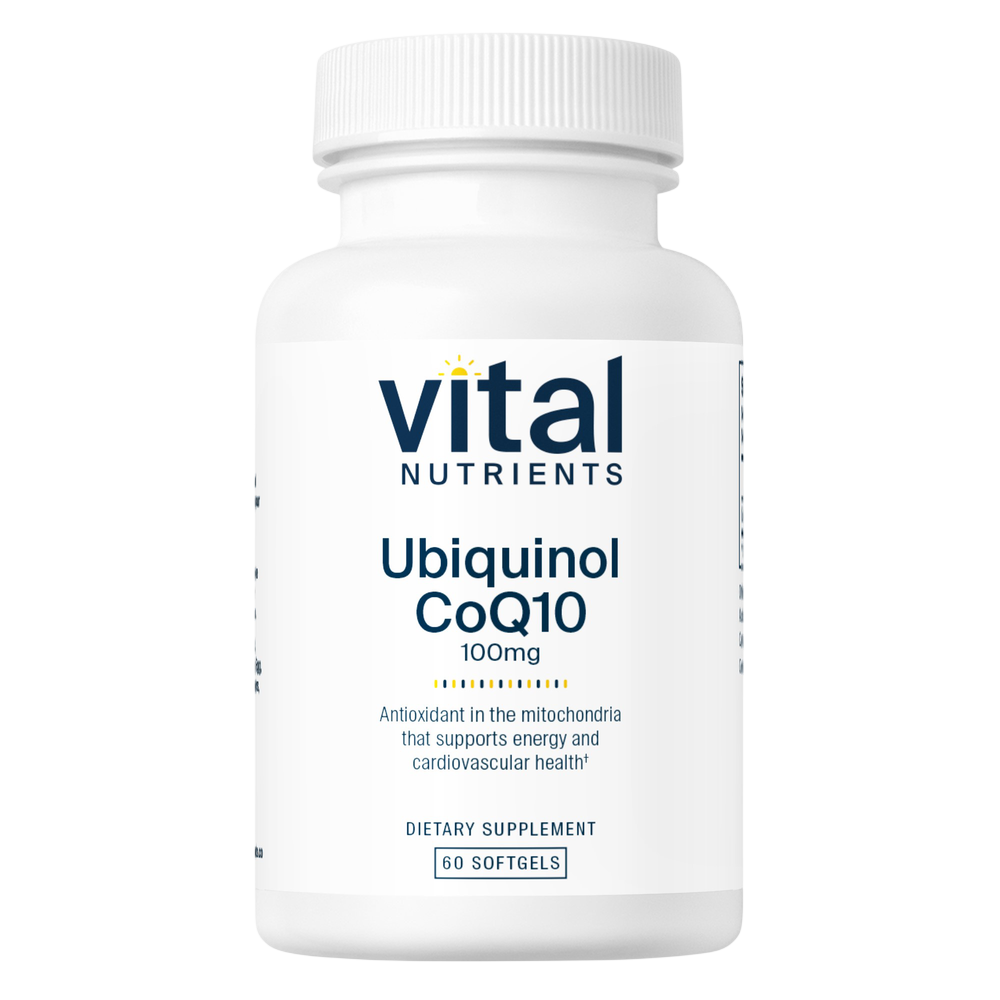
Ubiquinol CoQ10 100mg by Vital Nutrients
60 softgels · 60-day supply
Reduced-Form CoQ10 for Cellular Energy and Heart Health$74.99
Purchase options
Practitioner-grade brand3rd-party testedFree shipping $50+
Gluten Free·Dairy Free·Tree Nut Free·Fish Free·Crustacean Shellfish Free·Egg Free·
Vital Nutrients Ubiquinol CoQ10 100mg overview
Ubiquinol is the form of CoQ10 many people choose from their 40s on, when the body's own production tends to decline. It is also commonly taken by people on statins, which lower CoQ10 levels along with cholesterol; whether replacing it eases statin-related muscle aches is unsettled, with trials split. If you want a number to work from, a CoQ10 blood test shows where you start and whether a supplement is moving it.
CoQ10 sits in the inner membrane of mitochondria, where it carries electrons in the chain of reactions that makes ATP, the cell's energy currency. It also works as a fat-soluble antioxidant in cell membranes and on LDL particles. Ubiquinol is the reduced, antioxidant-ready form; ubiquinone is the oxidized form found in most CoQ10 products, and the body converts one to the other continuously. Some studies find that ubiquinol raises blood levels more per milligram, especially in older adults, though the formulation matters as much as the form.
Each softgel provides 100 mg of coenzyme Q10 as ubiquinol, and the label directs 1 softgel daily with food. A meal that contains some fat is best, since CoQ10 is fat-soluble and is absorbed poorly on an empty stomach. If your clinician suggests more than one softgel, split them between meals. Morning or midday suits the few people who find CoQ10 keeps them alert at night. The softgel contains soy lecithin and yellow beeswax, so it is not for anyone with a soy allergy.
The interaction that matters is warfarin: CoQ10 is chemically similar to vitamin K and can make warfarin less effective, so do not start or stop it without your prescriber, and expect closer INR checks. It may lower blood pressure slightly, which can add to blood pressure medicines. If you are having chemotherapy or radiation, ask your oncology team before taking any antioxidant. Side effects are uncommon and mild, mostly stomach upset. If you are pregnant or nursing, check with your clinician first.
Blood levels rise over 2 to 4 weeks of daily use. If you take it for energy or muscle comfort, give it 8 to 12 weeks before judging, and stop if nothing has changed. Rechecking CoQ10 after about two months confirms that it is being absorbed. Ubiquinone costs less and is the form used in most of the long-term research; ubiquinol is a reasonable choice when you want more absorbed from a smaller dose or have not responded to ubiquinone.
Frequently asked questions
What is the difference between ubiquinol and ubiquinone?
They are two forms of the same molecule, CoQ10. Ubiquinone is the oxidized form and ubiquinol the reduced, antioxidant form. Your body converts each into the other as needed. Ubiquinol may be absorbed somewhat better, particularly in older adults.
Should I take CoQ10 if I am on a statin?
It is a reasonable option. Statins lower CoQ10 levels, and some people report fewer muscle aches when they add it, although trials are mixed. It does not interfere with how statins lower cholesterol. Tell your prescriber, and never stop a statin on your own.
When is the best time to take ubiquinol?
With food, as the label directs; a meal that contains fat improves absorption. Breakfast or lunch is the usual choice, because a small number of people find CoQ10 mildly stimulating and sleep less well when they take it in the evening.
Can I take CoQ10 with blood thinners?
Check with your prescriber first if you take warfarin. CoQ10 resembles vitamin K and can reduce warfarin's effect, so your INR may need closer monitoring when you start, stop or change the dose. Other anticoagulants are less studied, so ask about those as well.
How long does ubiquinol take to work?
Blood levels climb over 2 to 4 weeks of daily use. Any change in energy or muscle comfort usually takes longer, so allow 8 to 12 weeks before deciding. If you notice nothing by then, it is reasonable to stop.
What are the side effects of CoQ10?
It is generally well tolerated. The most common complaints are mild stomach upset, nausea or loose stools, and occasionally trouble sleeping when it is taken late in the day. Taking it with food and earlier in the day usually resolves both.
How much ubiquinol should I take per day?
This product provides 100 mg of CoQ10 as ubiquinol per softgel, and the label directs 1 softgel daily with food. Some clinicians suggest more for specific situations; if yours does, split the softgels between meals instead of taking them together.
Can I test my CoQ10 level?
Yes. A CoQ10 blood test gives you a baseline, and repeating it after about two months of daily use shows whether the supplement is being absorbed. It is most useful if you take a statin or want to confirm the dose is doing something.
How to take it & ingredients
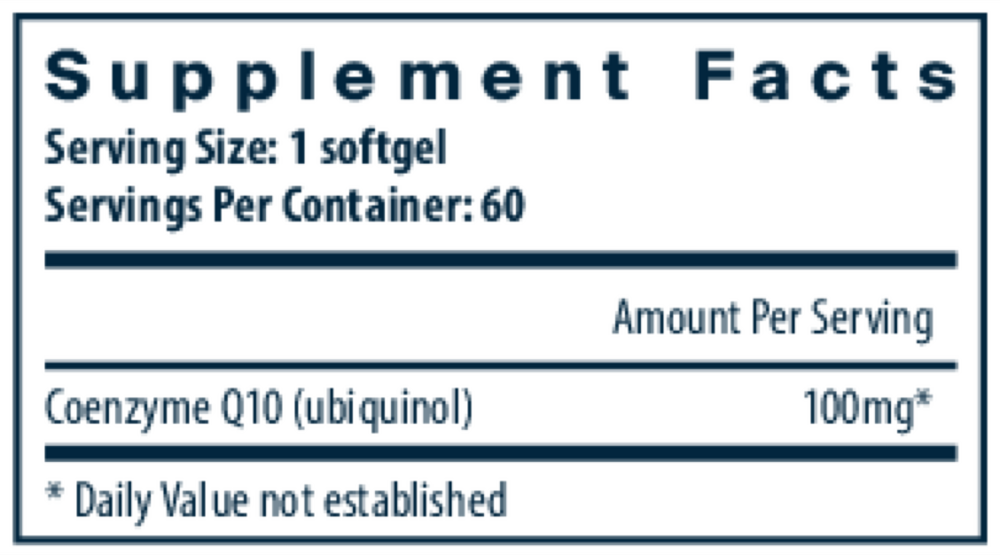
Suggested use: Take 1 softgel daily with food, or as directed by your healthcare professional.
Active ingredients
1 softgel per serving · 60 servings
Ubiquinol
Coenzyme Q10 (ubiquinol)
Coenzyme Q10 (ubiquinol)
100 mg
Other ingredients: Canola Oil, Polyglycerol Esters of Fatty Acids, Yellow Beeswax, Soy Lecithin, Modified Corn Starch, Carrageenan, Glycerin, Purified Water, Caramel
Certifications
Benefits
Warnings